Saturday, March 14, 2015

Buttermilk Panna Cotta

I made balsamic macerated raspberries to top this version. 
Panna Cotta isn'tt something I had ever thought to make at home before, and a dessert I'd only even eaten once, when a little cube of it was included on an artsy-looking modern dessert at Del Posto a few years ago.
But there was a recipe for it in a used cookbook I recently bought called Chefs of the Times, which is a compilation of a column the New York Times used to run, where it included chefs' thoughts about how they developed recipes in addition to the recipes themselves. The book itself if very late 90s--basically every chef has a different risotto recipe. I enjoyed reading it from cover to cover, and the recipe that stuck most in my mind was for this buttermilk panna cotta
It was incredibly easy, just as the recipe promised--and unbelievably delicious. It tastes like rich, smooth cheesecake--just a bit tangy and not too sweet. It's the best new recipe I've tried in a really long time. I'm not usually particularly interested in desserts--but this one was fantastic.
I've made it twice recently: once, for a dinner party at my sister's, and for my husband's birthday. For the first batch, I decorated it with balsamic macerated rasperries, and for the second, with warm pecan salted caramel. Both were fantastic, and really, this would go with anything. 
You can make a large panna cotta and slice it to serve, or you can make individual ones in a muffin tin. 
Yum.
Buttermilk Panna Cotta
  • 2 envelopes unflavored, powdered gelatin
  • 1 cup whipping cream
  • 1 teaspoon finely grated lemon peel
  • 1/2 cup sugar
  • 2 cups buttermilk
  • 2 teaspoons vanilla extract
  • Whatever garnish you want--the possibilities are endless.

Lightly spray six 3/4-cup ramekins or custard cups with nonstick spray. OR whatever you are going to put the panna cotta into. If you don't have ramekins, muffin tins work just as well
Heat cream, buttermilk, lemon peel, and sugar in medium saucepan over medium-high heat, stirring constantly until sugar dissolves. Increase heat and bring just to low boil, stirring occasionally. Add gelatin and whisk like crazy. Remove from heat. Add vanilla. Whisk until there are no gelatin lumps. Cool mixture to lukewarm, stirring often. Refrigerate panna cotta until set, about 4 hours.
DO AHEAD: Can be made 2 days ahead. Cover and keep chilled.

Again this SO so delicious. It's the sort of dessert you only expect in a restaurant, but couldn't be easier to make at home.
Enjoy!

Saturday, March 7, 2015

Pad Thai

Pad Thai for a crowd! 
I have been neglecting my recipe blogging this school year--all the post planning-and-grading evening hours I typically spend writing about cooking was suddenly shunted into writing college letters of recommendation for our VERY FIRST graduating class (*tear*). It was exhausting but worthwhile. I was thrilled and proud to have written a letter for my school's very first Ivy League accepted student.l. So work has been crazy busy, but also productive, rewarding, and fun.
During this hectic time, I've been cooking quite a bit--but just haven't bothered to take pictures of anything I made, let alone write it up.
So, I finally remembered with this Pad Thai, which I made last Tuesday night. I have been revising and re-revising my Pad Thai recipe for about a year--and I've finally settled on the definitive version. My recipe is authentic enough in a white-washed way, not crazily intricate or inclusive of impossible-to-find ingredients, like most of the pad thai recipes online written by actual Thai cooks. (The best website for actually-authentic Thai recipes is Thai Table, whose pad thai recipe includes preserved turnip and banana flower.) On the other end of the spectrum are super-whitewashed pad thai recipes, whose egregious, gross Americanizations include using ketchup or including turkey and a fucking slow cooker! No no no. This is Republican-mom recipe whitewashing, what Ann Romney probably thinks is pad thai.
On the Democrat side of fucking-up recipes, you have bullshit of the cider-vinegar, vegan, agave-syrup variety--even calling this "pad thai" is just wishful, deluded thinking on the part of sad, shivery, anemic vegans, consoling themselves with these disgusting fake noodles in the dark, skinny evenings of their empty and virtuous lives.
So my recipe is authentic-enough, makes no attempt at health consciousness, and tastes AMAZING. The one ingredient you need to go to an Asian market for is tamarind paste or tamarind concentrate (the paste is a solid, gummy block--the concentrate is liquid). Although, you can often find tamarind concentrate in a Hispanic market, too--just be careful not to buy the pre-sweetened kind.
All measurements are mere suggestions. I have never measured this. But this is an inexacting recipe--measurements are unnecessary.
This amount feeds 6-8 people. I always make this for a crowd. Last Tuesday I made it for Bachelor Night, for eight-ish people, and finished all of it.
Just halve things if you want dinner for two, plus leftovers.

Ingredients
2 or 3 packages of Pad Thai rice noodles
garlic
shallots
peanut oil
tamarind concentrate
fish sauce (Thai or Vietnamese)
brown sugar
2 or 3 eggs
bean sprouts
crushed peanuts
cilantro
lime
optional spicy stuff of your choice


Step 1: Soak two or three packages of rice noodles. Go buy dried or fresh pad thai rice noodles(you can find fresh in Asian supermarkets. Shout out to Pacific Ocean Marketplace). You can use thin, traditional pad thai noodles(often called "rice stick"), or thicker rice noodles usually used for Pad Seau. Put them in a bowl of room-temperature water with a few drops of peanut oil. Soak while you do everything else. NEVER BOIL RICE NOODLES.
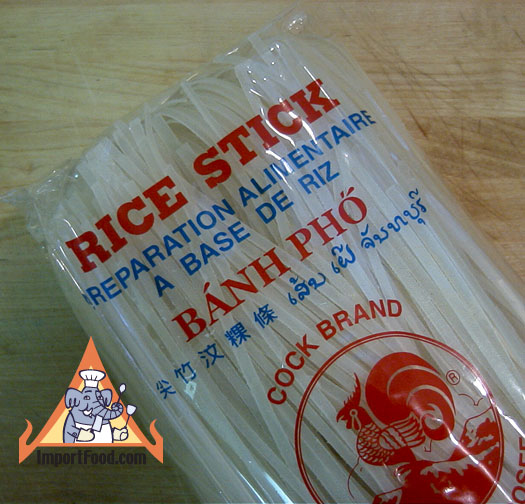
What I usually buy. 
Step 2. Make the sauce (these measurements are estimations). Combine 3/4 cup tamarind concentrate, 1/2 cup packed, light brown sugar (otherwise known as a handful and a half of brown sugar) and 1/2 cup fish sauce. Whisk together until sugar is dissolved. At this point, I include something spicy--a tablespoon of asian chile paste, a big squirt of sriracha, or a teaspoon of cayenne. But spice is optional and to taste.

Step 3: Dice up a BIG HANDFUL of garlic cloves (10-12 cloves) and two big handfuls of shallots. This is the most annoying part of the whole recipe.

Step 4: Cook! Ok, here is what you do: pour enough peanut oil into the bottom of your pot to coat it, then heat the oil up on high heat. When shimmering, toss in your minced garlic and shallot and fry, stirring frequently,  in the oil for about 3-4 minutes. This will infuse the oil with these flavors, and mellow the aromatics out a bit.
Garlic and shallots frying in peanut oil. 

Then, drain your noodles and place them in the hot pan. Use tongs to turn them--they'll slowly soften and cook. After about 3 minutes, add the sauce, then continue turning.
When noodles are hot and cooked, break two or three eggs over the noodles, and turn with tongs some more, until the eggs are broken and softly cooked, clinging to the hot noodles.
Then, toss in two handfuls of white bean sprouts, turn with tongs to incorporate into the noodles.

Step 5--finish! Top the noodles with a cup of crushed peanuts (put cocktail peanuts in a bag and step on them) and a bunch of chopped cilantro (buy one bunch, rinse and chop) (note--in the pictures I have green onions instead of cilantro, because the market was out). Quarter several limes and serve on the side for people to juice onto their portions. Some people might want soy sauce, for more salt. I also serve mine with sriracha, but that's just me.
Mountain of noodles, ready to be attacked. 
My (first) plate. I used thicker rice noodles this time. 
This is a basic, meatless version, but I also love it with shrimp or fried tofu.
Enjoy!


Sunday, July 27, 2014

Adult Mac and Cheese


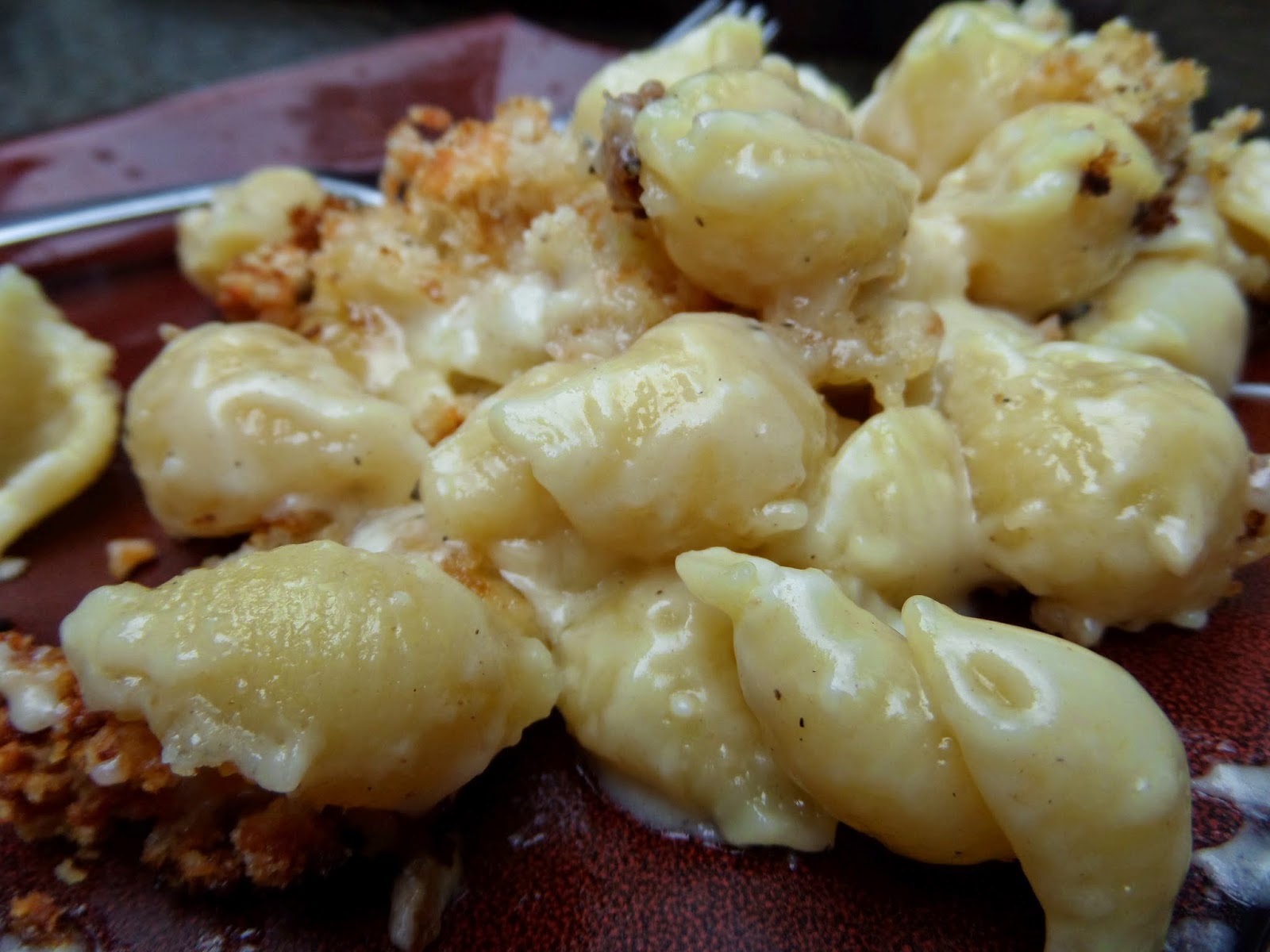
This mac-and-cheese contains gruyere, gouda, fotina, cheddar, and parmesan. Enjoy with champagne, a nice green salad, and gratitude for one's lack of children. 
I've been thinking obsessively about mac and cheese ever since I had the best version known to man at Caseus in New Haven. Their version lists the component cheeses:

I have never had raclette or comte in my life. And what on earth is Der Sharfer Maxx??? Sounds like a bad-ass biker cheese.
I set about trying to recreate this insanely mind-blowing food experience, but with the cheese offerings of my local Alberston's:
Ingredients!
I ended up using fontina, gouda, gruyere, and my all-time favorite, extra-sharp aged white cheddar from Cracker Barrel. 
This was the first time I've made mac and cheese at home. Why? Well, a small part of the reason is that my husband is lactose intolerant: the price of a dairy-heavy dinner is being hot-boxed all night by noxious, unrelenting ass. 
But really, the main reason I haven't even though to make mad and cheese is that it's a food associated with the worst eaters in humanity: American children. You think mac and cheese, you think a picky four year old who only eats mac and cheese, chicken nuggets, fries and apple sauce. You think dinosaur-shaped pastas drowning in neon hell sludge. You think of children's menus.  (why the fuck are children's menus even a thing? Can a child in a restaurant not simply eat a smaller amount of gnocchi or risotto or lamb chops? Why do we send children the message that hot dogs and grilled cheese are specifically their food? Why lead them down a fake-cheese and chicken-finger paved road to impacted bowels, obesity, culinary philistinism and a lifetime of microwaving Swanson's freezer bags of failure?) 
Nightmare. 
The culturally accepted food of American children is foul, beige, processed, bland bullshit, and as a rule I want nothing to do with it. 
My house, kitchen and life away from work are adult-only spheres: rare meat, dark green salads, anchovy vinaigrette, noodles with chiles and fish sauce, gorgonzola, strong homebrew, Scotch, large travel expenditures, 11 am weekend wake-ups, homemade hot pickles, The Wire, casual nudity, and multi-day cooking projects. 
I'm sure if we ever actually produce a small human, it will automatically pop out enjoying stouts, short ribs and braised cabbage and I won't have to change my habits at all. 
Anyway--the mac and cheese at Caseus changed my whole mac-and-cheese paradigm. As I shared a bottle of wine and dug in I realized: mac and cheese is legit amazing, in certain forms. And! Perhaps mac and cheese can be a suitable adult foodstuff! My mind was blown. 
Let's spend the whole afternoon eating mac and cheese and drinking champagne on the deck! 
Consuela loves this sort of thing. 
My version didn't really compare to Caseus. But it was still super bomb. I served it for the monthly meeting of my cookbook club. Only three members of the club could attend this meeting, including Consuela.

Ingredients
1 pound of large pasta shells
1 quart of whole milk 
4 tablespoons of butter
3 tablespoons flour
2 teaspoons dry mustard powder
1 head of garlic, minced
1.5 ish cups shredded gruyere (just shred the whole block) 
1.5 ish cups shredded gouda 
1.5 ish cups shredded fontina 
2 cups shredded extra-sharp white cheddar 
2 cups panko bread crumbs 
1 cup shredded parmesan 

So much cheese. 
What to do
Boil some salted water for the pasta. Cook the pasta for 2-3 minutes less than the cooking time on the bag / box calls for, as you will also be baking it, and you don't want it to get mushy. 
Grease a casserole. Preheat the oven to 350. 
Melt the butter in the bottom of a large pot. When it's completely melted, add the flour and stir constantly, allowing the flour to become caramel brown, about 3-4 minutes. You made a nice roux! Add the mustard powder, about a tablespoon of the minced garlic, and a big pinch of black pepper. Stir for another 30 seconds to fry your spices, then add the quart of milk. 
Whisk the milk mixture until it steams up, just on the edge of boiling. Then, add all the shredded cheese and whisk like crazy. Keep the pot on the heat, whisking, until the sauce is smooth and hot, just on the edge of boiling.
cheese sauce!
Add the cooked pasta. Mix the pasta into the sauce, then pour into the greased casserole. It's ok if it looks a bit soupy at this point--as you bake it, a lot of the liquid will be soaked up by the pasta, and some sauciness will only enhance the luxury of the final product. 

Add the bread crumbs to a dry saute pan. Add the remaining garlic and the parmesan. Toss over a flame until golden and crunchy, then scatter evenly over the top of the casserole full of pasta and cheese sauce. 
Bake at 350 for about half an hour--until cheese is bubbling and the top is golden. 
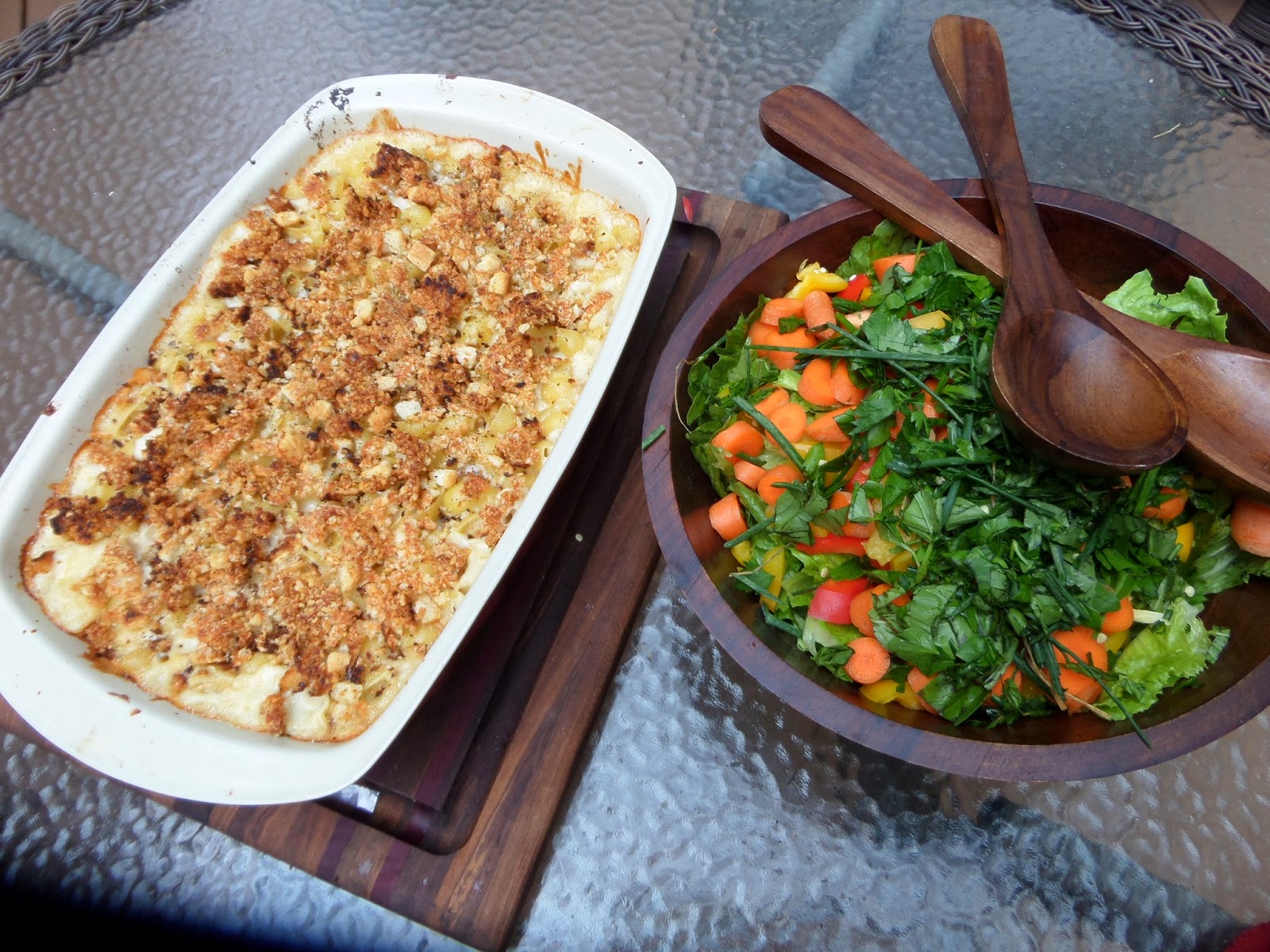
Serve with a side salad. 

This was delicious. But I feel I could improve it even more--maybe using smoked gouda and adding some chevre to the sauce? Maybe toasting the bread crumbs in truffle oil? The possibilities are endless. 
 Enjoy! 

Thursday, July 24, 2014

Cherry Streudel from the Settlement Cookbook

Nothing with baked cherries ever tastes entirely bad. 
Well, I am back to both cooking and blogging about cooking after a good month or so in which I did neither. First, my husband and I went to Tanzania. It was amazing and perfect, but the extent of my food preparation was pouring some Jim Beam into highball glasses around sunset. 
The food on this trip was good, but not particularly memorable. It was the sort of food you'd find in a nice hotel anywhere. The one really special thing was the fresh fruit: 
Best-tasting, freshest fruit. 
Then, a day after returning from Africa, I left for New Haven to attend a rather intense teacher conference where I stayed in a hotel for ten days.
My good friend Amanda is getting her PhD in New Haven, and she loves food just like me, so we had some great dinners, most notably, the macaroni and cheese at Caseus. This mac and cheese was one of the best things I've eaten in years. Transcendent, fabulous mac and cheese. 
I am in awe of the deliciousness of Caseus' mac and cheese. Don't ever leave New Haven without eating this. 
Right after the program ended, I took to train to New York to spend the weekend visiting my husband's family. It was a weekend of fantastic eating. 
We had soupy dumplings and Peking duck near his father's on the upper East Side,at a lovely Chinese restaurant with hundreds of waiters, called Shun Lee.  There are really few things as delicious as roast duck with crispy skin, rolled up with a bit of hoisin and scallions. 
Then the next morning, after a long debaucherous night out with friends--where we were serendipitous-ly picked up by the Happy Cabby and treated to a crosstown disco, then drank and screamed karaoke till 2 am--we woke up late and ordered in bagels and lox while staring out the windows at seaplanes taking off from the East River. 
Then we headed to Brooklyn. Adam's mom planned his absolute favorite food event available on this planet: dinner at Peter Luger's. Adam is far less given food-rhapsodizing than I, but he can speak at length on why Peter Luger's is the perfect restaurant. We had tomatoes-and-onions, steak, spinach, and potatoes. Then for dessert, Adam and his mom got pecan pie and apple strudel, and I just ate scoops of the giant bowl of whipped cream ("schlag") that came with. If I even get close to cooking steak half as good, my life will have been worth it. 
Full and happy. 
After dinner we walked off our full bellies along the newly-redone waterfront area by the Brooklyn docks. On a Saturday night it was teeming with families, walking and playing soccer and barbecuing. A joyful and egalitarian view of city planning.
In Brooklyn, we also got Italian ice and pizza.
So, this summer has had some fantastic food, but not much cooking. 
OK, I got so excited remembering everything I've eaten in the past few weeks that I forgot what I was writing about! Cherry Streudel! 
OK, so I found this very old cook book on the shelves in my mother-in-law's house in Brooklyn. She's lived there since the 70's so I find interesting old stuff every time I stay there. 
The 1932 version of the Settlement Cookbook.

This belonged to Adam's paternal grandmother, who, according to his father, was a very poor cook. Tucked  into the pages was a handwritten recipe for "prune cream whip."
This book is very well-known and loved in Wisconsin. It contains a few chapters of general house-wifely information: baby feeding schedules, how to cook for an invalid, what to wear while cooking ("a breathable cap") etc. The recipes are simple--few ingredients--bland, and labor intensive. Being pre-WW2, there are very few instant, canned or other convenience foods.
 I stole it and brought it back to Denver to try some recipes. 
Milwaukee, what the hell.
 There were a lot of recipes for strange and unappealing-looking foods lost to history. I don't know if anyone could be a good cook it this was her main source of information. But I decided to try a recipe from it anyway--I decided cherry struedel because it sounded delicious and cherries are beautifully in-season right now. 

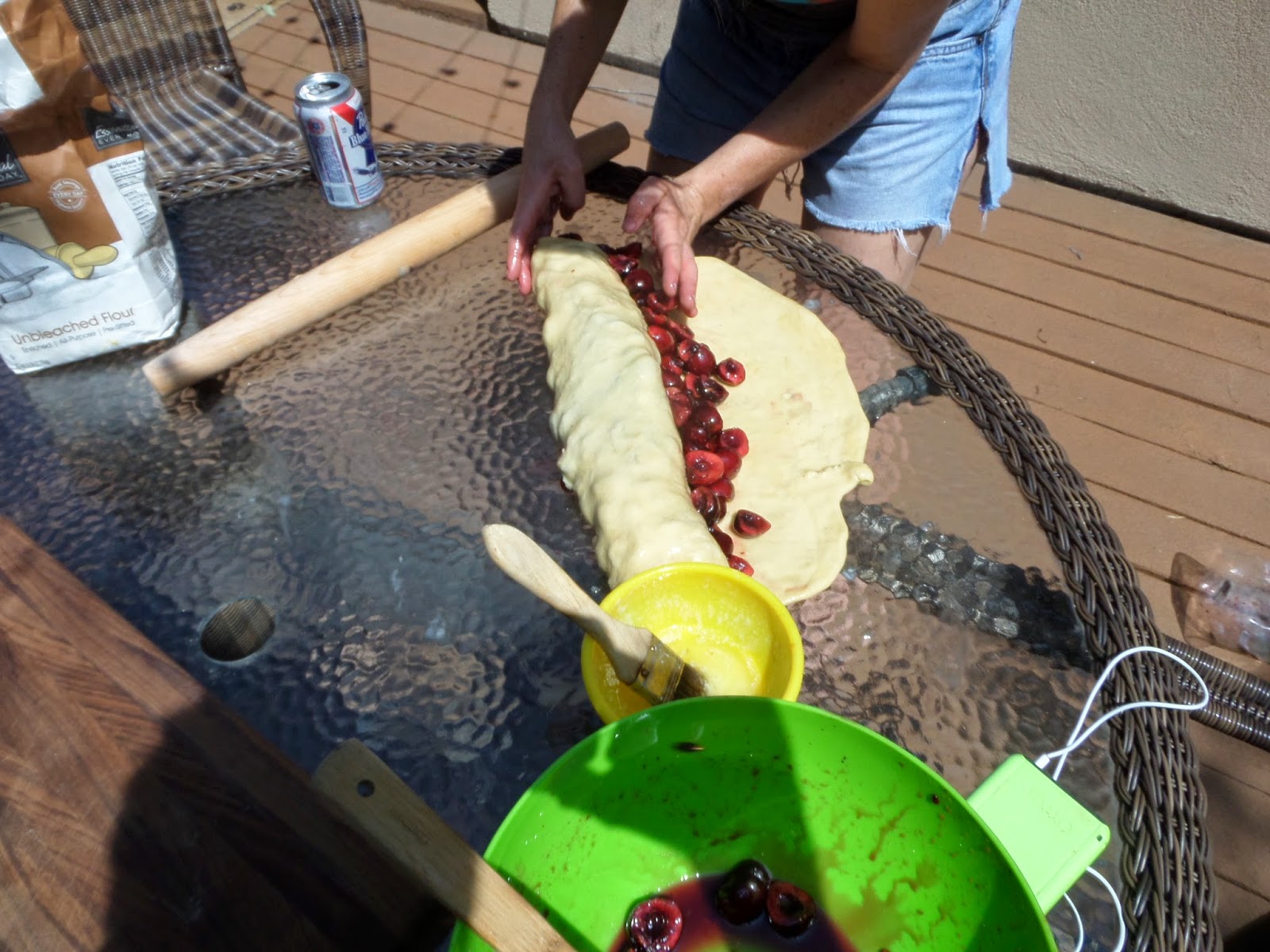
I made the dough, pitted a ton of cherries, and baked the whole thing. It was fun and relaxing, putzing around all day doing cooking projects. 
Drinking PBR, making pastry and not teaching--why I love summer. 

So how did it turn out???
Meh. OK.
It better than not eating cherry struedel, but not as good as pastry-wrapped fresh macerated cherries ought to taste. The dough didn't call for any sugar or fat, and ended up being a sort of tough bread. I read a bunch of recipes online that called for phyllo dough or a more buttery pastry--if you want to make cherry struedel, I would recommend finding one of those, and not using this recipe. I am not even going to bother retyping it.
Tastes ok, but not fantastic. 
My apologies to Ms. Simon Kander, but I don't know when I'll be attempting one of her recipes again, other than for a joke. Though I'm sure, if you could find the fresh fruit, this would have been a real treat back in 1932 Milwaukee. 
I have a couple of precious weeks left before school starts. Looking forward to getting back to some excellent home cooking, dinner on the deck, and relaxing as much as possible before getting back to the grind.
Enjoy!

Sunday, June 15, 2014

Torta Espanola


A perfectly crisp-and-soft Spanish tortilla, smelling of olive oil, eaten at room temperature. 
Delicious and perfect. 
As I mentioned in my last post, I've been cooking tons of meat lately. A great many pounds of muscle tissue have been turned into dinner in the last couple months, when I was too stressed from school to bother posting anything. Of note, there was: 

1. An enormous brisket, which I pickled into corned beef, then turned into pastrami for Passover seder. This picture is me searing a 16 pound brisket at 4:30 am, because it needed to cook slowly all day, and I had to leave for work at 7. This turned out fabulous and I wish I would have gotten a picture of the finished product, but I was too busy telling hilarious and clever afikoman jokes. 

2. Carne Asada, which I made to celebrate my brother's arrival in Denver. I marinated it in orange, lime, beer, garlic and other spices for a few days, then grilled it, and made my customary array of sauces: rojita, chimichurri, and guacamole. 

3. My brother grilled some beef heart--a dish he came to love while studying in Quito. 

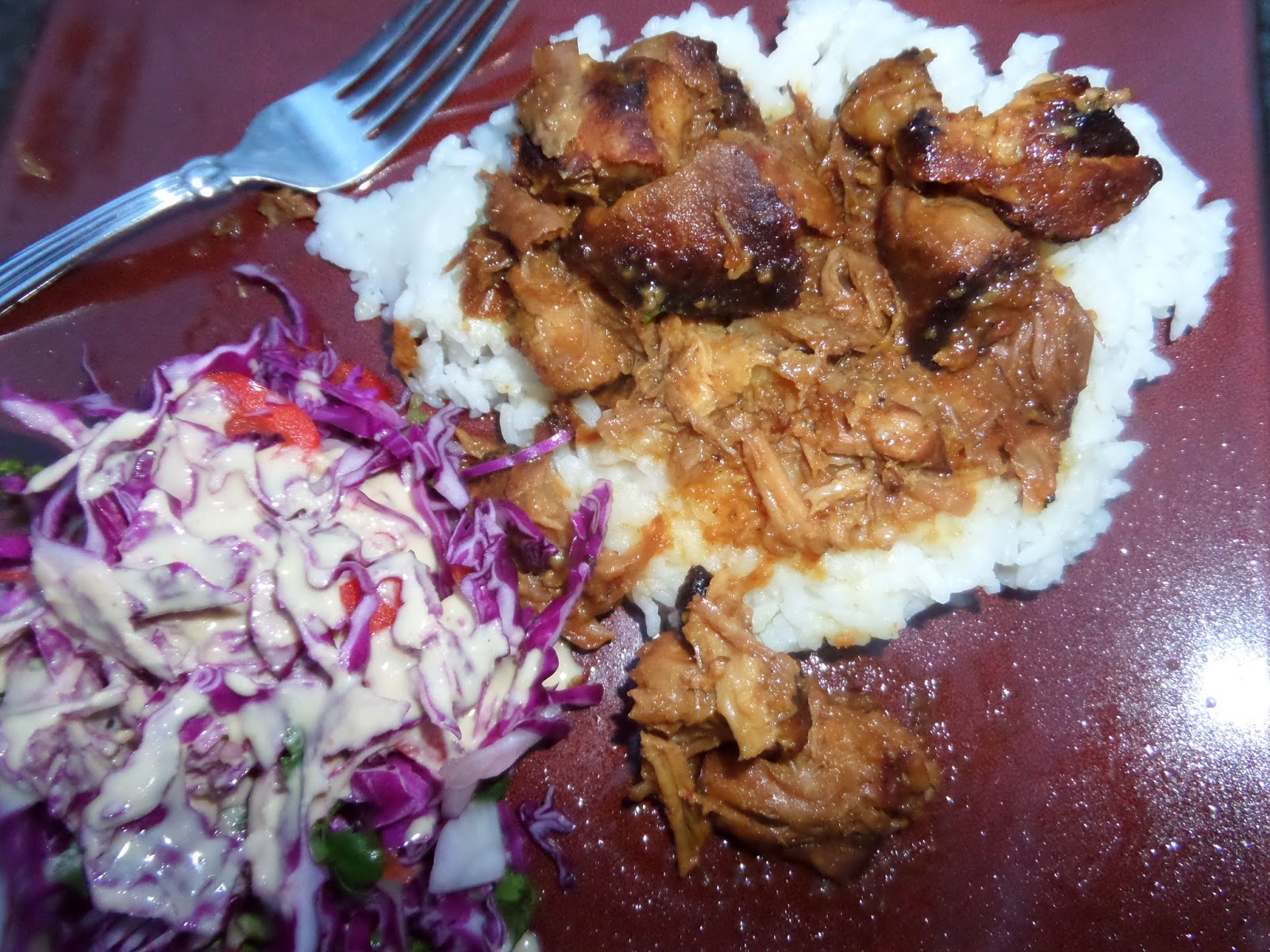
4. Orange-soy braised pork, which I made to take to a coworker who'd recently had a baby. I made an extra-large batch so we had it for dinner, too. This cabbage slaw with peanut vinaigrette is one of my favorite salads. 

On top of all this, there was the beef brisket, glazed pork, pork belly and gallons of accompanying booze for merriment in the backyard. 
Is reading this giving you meatsweats? Me too. Today I was mildly ruminating on what to make for dinner. It's summer, so I have a great many free hours to contemplate exactly what I want for dinner. And the thought of meat was entirely off-putting.
So I decided to make a couple of recipes from a cookbook I recently purchased in the bargain section of Tattered Cover. 
I couldn't resist purchasing this, despite the fact that I've already read the majority of these recipes and essays in Elizabeth David's other books I already own. She's tied with Jeffrey Steingarten as my favorite food writer of all time (I love a prickly, disdainful voice in food writing).  The pictures were beautiful. And the recipes, though nothing I don't already know how to cook un-guided, are oddly comforting to read. If you've never read any Elizabeth David, I recommend An Omelet and a Glass of Wine--it's my favorite.  
Anyway, I settled on a Spanish tortilla and a Greek baked-eggplant in tomato sauce. 
Both turned out fabulously. 
A delicious summer dinner. 
I preferred the eggplant dish--eggplants fried in olive oil, then baked under a Greek tomato sauce I made with ripe summer tomatoes, capers, olives, anchovies and garlic. But eggplant has long been my favorite vegetable. I love, love inky, sticky fried eggplant skin. 
But my husband and brother both loved the torta more. 
We ate it with some sour cream and an extra-burning (nearly inedibly hot, really) salsa I got from a carniceria. 
Arugula with balsamic, Greek baked eggplant, torta Espaniola. 


This was a fabulous dinner, and a welcome relief from the shameless meat frolic of the summer so far.
I copied the recipe exactly, but didn't soak the potatoes (???this seems stupid) added half an onion, diced, and scattered the top with some parsley and chives. 

Elizabeth David's Spanish Tortilla


A Spanish tortilla is a thick, flat omelette, consisting only of eggs, potatoes and seasonings. It is cooked in olive oil, should be compact and have almost the appearance of a cake, can be eaten hot or cold, and makes a splendid picnic dish, especially for a car journey. A big tortilla will keep moist for three days.
The following recipe, in note form, is exactly as I wrote it down while watching Juanita, the village girl who once cooked for Anthony Denney in his house in the province of Alicante. The notes seem to me to convey the eessential points about making a tortilla more vividly than would a conventional recipe, and I have used them often without in any way altering the method, except to cook the potatoes rather more gently than Juanita did - she was never a patient girl.
Serves 4-6
about 1lb/450g of potatoes for 4 eggs
potatoes all cut up small, soaked in plenty of water (like for gratin Dauphinois)
Cooked in olive oil (she lets it smoke) in shallow earthenware dish directly on Butagaz. Tiny piece of garlic. Stirred fairly often, and pressed with flat iron spatula-spoon. Salt. In the end the potatoes are almost in a cohered mass. If any pieces too big she cuts them as they cook with her iron implement.
She beats the eggs in a bowl, dips in the potatoes (slightly cooled; they have been transferred to a bowl) and mixes them well.
The tortilla is cooked in an iron omelette pan with smoking oil. It puffs up. She holds a deep plate in her left hand and turns the tortilla into it. Then back into the pan. And process repeated (sometimes twice, it depends if she is satisfied with its appearance).
Notes: as a tortilla is a very filling dish, I find that half Juanita's quantities, ie approximately 12lb/225g of potatoes and two eggs makes enough for two or three people. It is, of course, easier to handle in this smaller form, for which I use an iron pan of 20cm diameter, measured at the top. For a four-egg tortilla use a 22cm or 24cm pan.
For the initial cooking of the potatoes I still use a Spanish earthenware dish over direct heat, as did Juanita (it is a delicious way of cooking potatoes, and need not necessarily be reserved for the tortilla), although an ordinary frying pan serves perfectly well.
About the spatula spoon: this is a charctertistic Spanish kitchen implement, a round, flat pusher, as it were, with a long handle, used mainly when the paella is cooking, and just right for moving the rice and other ingredients around in the pan. I use a thin, wooden spatula or palette knife instead.
Really fresh eggs are necessary for a tortilla. Stale ones don't puff up, and so produce a flat omelette.


This recipe is easy, cheap, delicious and elegant. Can be eaten for any meal, hot, cold or room temperature, slathered with sauce or accompanied by some salami or anchovies, or just a salad. 
Wonderful. 
Enjoy!